Nuclear Battery Fusion Speeds Path to Clean Energy

Nuclear battery fusion could finally give fusion energy the breakthrough it needs. You know how fusion has promised clean, nearly limitless power for decades? The challenge has always been turning that raw energy into usable electricity efficiently. Now, advances in nuclear batteries offer a smarter workaround.
In simple terms, this approach captures radiation from fusion reactions and converts it directly into electricity. That means less wasted energy and fewer damaged components. The idea isn’t just clever it could reshape how we think about fusion entirely.
What Makes Nuclear Battery Fusion Different
The concept behind nuclear battery fusion builds on a familiar principle. Nuclear batteries convert energy from radioactive decay directly into electricity, without relying on turbines or moving parts.
This isn’t new technology. Space missions like those run by NASA have used similar systems for decades. What’s new is how improved materials now make these batteries far more efficient and durable.
Today, researchers are adapting this same concept to fusion reactors. Instead of wasting radiation, they use it as an additional energy source. That shift alone could significantly improve overall performance.
Why Nuclear Battery Fusion Addresses Fusion Hurdles
Fusion energy sounds simple combine light atoms and release massive energy. In reality, it’s much harder. One major issue is dealing with high energy alpha particles produced during reactions.
These particles damage reactor walls and reduce efficiency. Traditional systems convert heat into electricity using turbines, losing a large portion of energy in the process.
This is where nuclear battery fusion changes the game. By capturing those particles directly, reactors can generate electricity more efficiently while reducing wear and tear. It’s a two in one solution to two of fusion’s biggest problems. Why AI Energy Investment Is the Smartest Bet Today
How Nuclear Battery Fusion Improves Reactor Efficiency
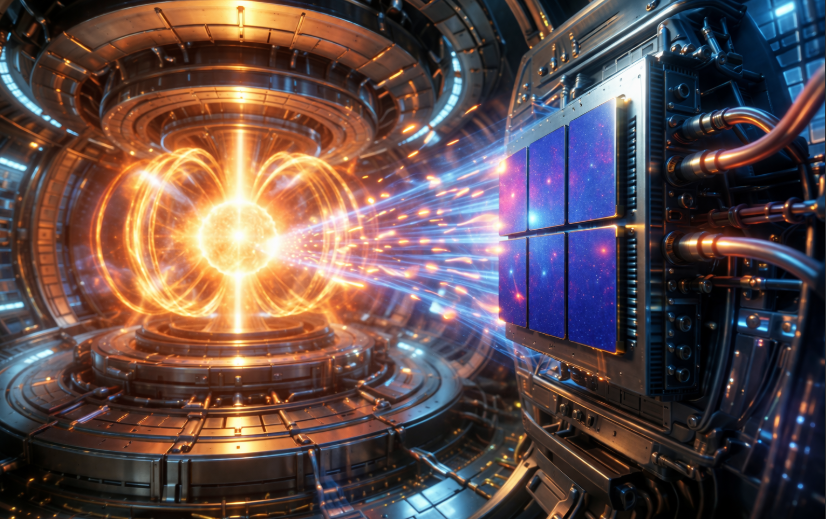
The most exciting benefit of nuclear battery fusion is its ability to generate electricity instantly from radiation. Radiovoltaic materials act like solar panels but instead of sunlight, they use radiation.
Here’s what that means in practice:
- Extra electricity is produced directly inside the reactor
- Reactor walls receive less damage
- Overall efficiency increases significantly
Companies like Avalanche Energy are already exploring this approach. Backed by organizations such as DARPA, they are developing compact fusion systems using radiovoltaics.
This kind of innovation could help fusion reach “breakeven” faster the point where reactors produce more energy than they consume.
The Science Behind Nuclear Battery Fusion Technology
At the heart of nuclear battery fusion is radiovoltaic conversion. The process is straightforward:
- Radiation hits a semiconductor material
- Electrons are released
- Those electrons create an electric current
Earlier versions of this technology struggled with durability. Radiation would degrade materials quickly. However, modern semiconductors are far more resistant, making long-term operation possible.
This breakthrough allows fusion reactors to reuse their own radiation as a resource rather than treating it as waste.
Real-World Applications of Nuclear Battery Fusion
The impact of nuclear battery fusion goes beyond theoretical research. Governments and industries are already investing heavily.
Military organizations are especially interested. Reliable, long-lasting energy sources are critical for remote operations. Nuclear batteries can power:
- Remote bases
- Autonomous systems
- Long-duration sensors
At the same time, fusion startups aim to replace diesel generators with compact fusion devices. These systems could provide clean, continuous power without constant refueling.
Challenges Facing Nuclear Battery Fusion Development
Despite its promise, nuclear fusion still faces obstacles. Materials must withstand intense radiation for years, if not decades.
Other key challenges include:
- Strict safety regulations
- High development costs
- Scaling the technology for commercial use
However, progress is accelerating. Advanced simulations now help researchers design better materials faster. Increased funding from both governments and private investors is also pushing innovation forward.
What Nuclear Fusion Means for Clean Energy
The broader impact of nuclear battery fusion could be massive. Imagine fusion plants that are:
- More efficient
- Less expensive to maintain
- Capable of delivering constant, carbon-free energy
This would transform industries like data centers, which require reliable power 24/7. It could also support remote infrastructure and emerging technologies like edge computing.
Learn more about Reducing Your Carbon Footprint in IT Operations.
Explore fusion research updates from International Atomic Energy Agency.
The Future of Nuclear Battery Fusion
The fusion race has felt slow for decades, but nuclear fusion introduces a fresh direction. By converting radiation into usable electricity, it solves efficiency and durability challenges at the same time.
Companies like Avalanche Energy show that practical applications are already underway. With continued research and funding, fusion could move from experimental to mainstream faster than expected.
It may not be the most visible innovation, but it could be one of the most important. Sometimes, the biggest breakthroughs come from the smallest components.
FAQs
What is nuclear battery fusion?
It’s the use of nuclear battery technology to convert radiation from fusion reactions directly into electricity.
Why is nuclear battery fusion important?
It improves efficiency, reduces damage to reactors, and helps achieve energy breakeven faster.
Is nuclear battery fusion safe?
Yes, when properly designed. It uses controlled materials and follows strict safety standards already proven in space and research applications.
When will nuclear battery fusion be used commercially?
Early-stage development is happening now. Commercial use could emerge within the next decade if progress continues.
Who is leading nuclear battery fusion research?
Startups like Avalanche Energy and organizations such as DARPA are key players driving innovation in this field.
Author Profile

- Online Media & PR Strategist
- Hello there! I'm Online Media & PR Strategist at NeticSpace | Passionate Journalist, Blogger, and SEO Specialist
Latest entries
 Simulation and ModelingApril 8, 2026Nuclear Battery Fusion Speeds Path to Clean Energy
 Artificial InteligenceApril 7, 2026Anthropic UK Expansion: Ethics Driving UK AI Growth
 AI PlatformApril 7, 2026Picsart Creator Monetization Program for AI Creators
 AI WorkflowsApril 6, 2026ChatGPT App Integrations Guide: Apps, Setup & Tips