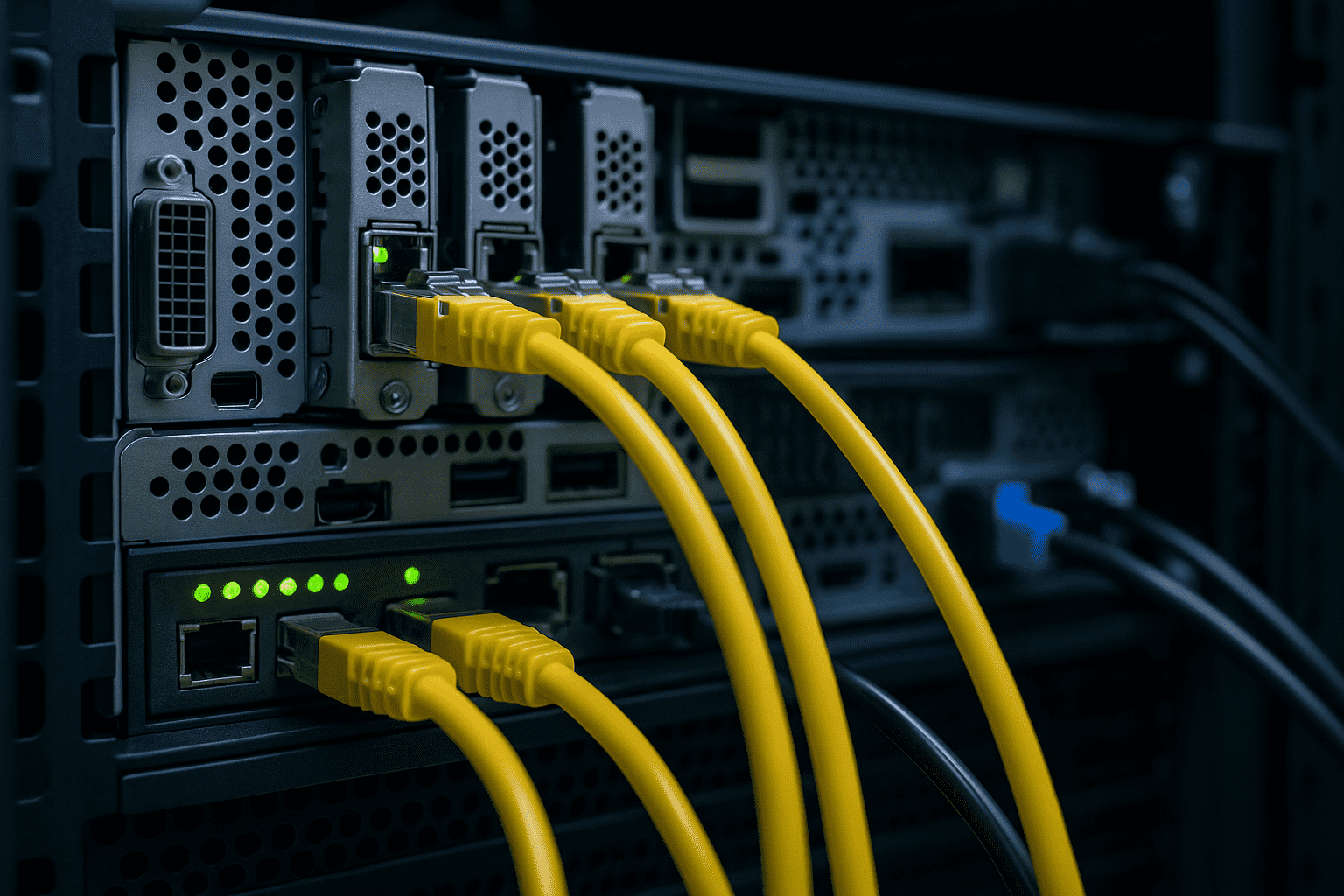
High Speed Networking for Quantum AI Systems Growth

High speed networking plays a critical role in modern computing, especially as quantum and AI systems evolve. From distributed GPUs to fragile quantum links, high speed networking enables machines to communicate instantly across distances. Without it, both AI training and quantum operations would slow down or fail entirely.
You might wonder why this matters so much. Quantum bits lose stability quickly if delays occur, while AI systems rely on moving massive datasets between thousands of processors. Simply put, faster and more reliable connections make these technologies practical. Let’s break down what has changed and why it matters.
High Speed Networking in Distributed Quantum Systems
High speed networking forms the backbone of distributed quantum computing. Instead of relying on a single machine, quantum processors are now connected across multiple locations. These setups depend on ultra-fast classical signals to maintain quantum coherence.
Recent research from IonQ in 2025 showed something interesting. Even networks with moderate speeds can outperform a single large quantum computer for specific tasks. This finding suggests that scalability may matter more than perfection in early systems.
Meanwhile, companies like Nu Quantum continue expanding research. Their Cambridge lab focuses entirely on improving quantum communication over fibre networks. These developments highlight how high speed networking supports real-world quantum scalability.
Ethics of AI Network Surveillance in Modern Cybersecurity
High Speed Networking for Entanglement Distribution
High speed networking now supports both classical and quantum data transmission within the same infrastructure. This is a major step forward. Scientists have successfully demonstrated stable entanglement across city-scale fibre networks while maintaining regular data traffic.
Another breakthrough comes from quantum repeaters and transducers. Devices from companies like QphoX convert quantum signals into forms suitable for long-distance transmission. This allows quantum data to travel without requiring extreme cooling at every step.
Scheduling also plays a key role. Advanced algorithms ensure entangled states arrive before they degrade. As a result, reliability improves across multi-node quantum systems. These improvements show how high speed networking continues to evolve steadily rather than through sudden leaps.
High Speed Networking in Distributed AI Systems
High speed networking is equally essential for AI infrastructure. Large-scale AI models depend on thousands of GPUs working together. These systems must exchange data instantly to avoid bottlenecks.
For example, Meta uses RDMA over Ethernet (RoCE) to power massive AI clusters. This allows data to move efficiently between processors with minimal delay. Similarly, Oracle’s Zettascale clusters demonstrate how scalable networking supports hundreds of thousands of GPUs.
Modern switches now exceed 800 Gbps, enabling faster communication than ever before. This directly impacts training times, especially for models with billions or even trillions of parameters.
Explore AI infrastructure trends here.
High Speed Networking Advances for AI and Quantum
High speed networking continues to benefit from industry-wide collaboration. The Ultra Ethernet Consortium introduced new open standards that reduce costs while maintaining performance. This makes advanced networking more accessible across industries.
At the same time, companies like NVIDIA are integrating photonics into networking hardware. Optical connections reduce power consumption and increase speed within data centers. Interestingly, similar fibre technologies are now used in quantum systems as well.
Events like HAIQ 2026 bring together experts from AI, quantum computing, and high-performance computing. These collaborations highlight a growing trend: shared infrastructure that supports both classical and quantum workloads.
High Speed Networking Challenges and Solutions
Despite progress, high speed networking still faces challenges. Quantum signals weaken over long distances, making stability difficult to maintain. AI systems, on the other hand, consume enormous amounts of power.
To address these issues, researchers are developing smarter routing techniques and improved error correction methods. These solutions help maintain performance without requiring excessive resources.
Cost is another concern. Building large-scale networks can be expensive, especially for emerging technologies. However, newer Ethernet standards help reduce costs by using widely available components instead of specialized hardware.
Integration also remains complex. Quantum systems and AI architectures operate differently, but hybrid control systems are beginning to bridge this gap. Over time, these solutions will make high speed networking more unified and efficient.
Future Innovation
High speed networking will continue shaping the future of computing. As quantum systems become more practical and AI models grow larger, the demand for faster connections will only increase.
We are already seeing early testbeds that combine quantum and AI workloads within shared networks. These environments provide valuable insights into how future systems will operate.
Fibre upgrades, photonic innovations, and advanced scheduling tools will play a major role. Together, they will determine how quickly we reach scalable, real-world applications.
In the end, high speed networking is not just a supporting technology it is the foundation that enables distributed intelligence. It connects machines, accelerates innovation, and transforms how computing systems operate globally.
FAQs
What is high speed networking in quantum systems?
It enables communication between quantum processors using both classical signals and quantum states, ensuring stability and synchronization.
How does high speed networking improve AI training?
It allows GPUs to exchange data instantly, reducing delays and speeding up model training significantly.
Can one network support both quantum and AI systems?
Yes, modern hybrid networks are designed to handle both classical and quantum data simultaneously.
Why is Ethernet becoming popular in AI networking?
It offers a cost-effective, scalable alternative while still delivering high performance for large clusters.
What is the biggest challenge today?
Maintaining quantum stability over long distances while supporting massive AI workloads efficiently.
Author Profile

- Online Media & PR Strategist
- Hello there! I'm Online Media & PR Strategist at NeticSpace | Passionate Journalist, Blogger, and SEO Specialist
Latest entries
 AI WorkflowsJune 30, 2026X MCP Server Helps AI Tools Connect Faster and Smarter
 AI PlatformJune 19, 2026Microsoft AI Strategy Shapes China’s Enterprise AI Future
 AI WorkflowsJune 16, 2026Reliable AI Systems: Why Probably’s $9M Funding Matters
 AI WorkflowsJune 15, 2026AI Shopping Agents: Why Consumers Trust Them More