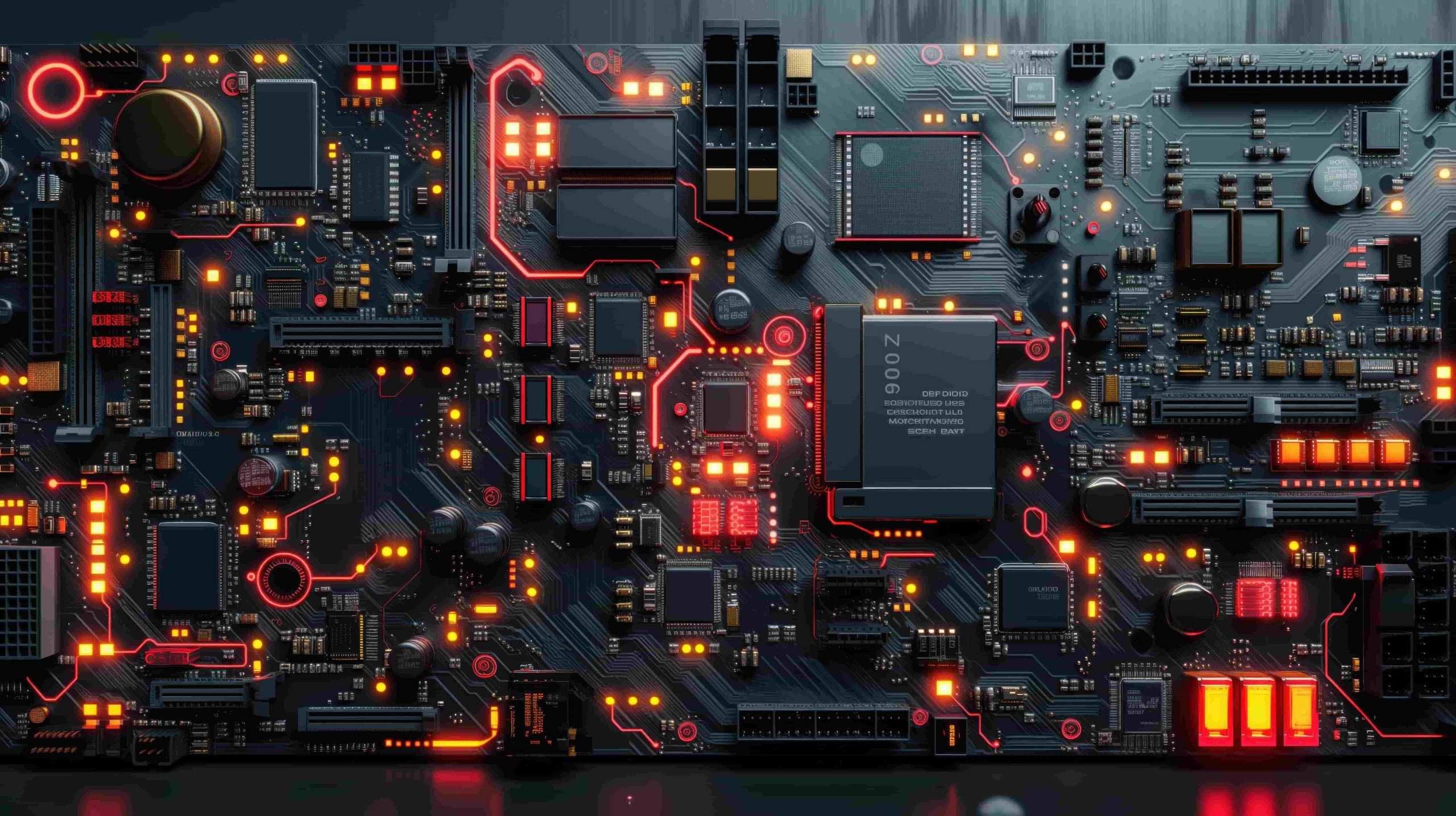
Future of HPC & AI in the post Moore computing era

In this new era of post Moore computing, progress in HPC and AI no longer comes from simply shrinking transistors. For decades, Moore’s Law kept us moving forward effortlessly. But honestly, that smooth ride is slowing down now. Physics limits kick in, quantum effects show up, and traditional shrinking becomes expensive and difficult. So the industry turns to smarter ideas, new architectures, and revolutionary materials to keep performance climbing.
This article keeps the same tone as the original while expanding on what truly comes next. You’ll see how innovations neuromorphic processors, photonic chips, chiplets, and hybrid models push HPC and AI forward even when old tricks no longer apply in the post Moore computing landscape.
Why Moore’s Law Matters Less in the Post Moore Computing Era
Moore’s Law powered huge leaps in computing for decades. Faster processors, cheaper hardware, and incredible scaling made massive AI models and supercomputers possible. But from around 2025 onward, shrinking transistors hit limits. Heat rises, costs explode, and gains slow down.
For HPC and AI, that shift is massive. Training large models demands insane energy. Climate simulations, drug discovery, and physics research push supercomputers harder than ever. In this new post Moore computing period, simply relying on smaller transistors won’t cut it.
So engineers look elsewhere:
First, smarter architectures.
Next, specialized systems.
Finally, entirely new computing models inspired by nature and physics.
Without these changes, progress in HPC and AI would stall.
Bridge Technologies Supporting Post Moore Computing Transition
Before the big revolutions, we rely on transitional technologies—bridge solutions that extend the life of current chip designs during the post Moore computing shift.
Key approaches:
-
Chiplets: Break huge chips into smaller functional modules. They improve yield, reduce waste, and let companies mix optimized components.
-
3D stacking: Layers of silicon stacked vertically reduce distances and improve speed.
-
Domain-specific accelerators: GPUs, TPUs, and custom ASICs outperform general CPUs for targeted tasks.
Benefits include:
-
Higher performance without new transistor nodes
-
Better efficiency in data centers
-
Lower development cost
-
Flexible architecture design
Internal link: Learn how accelerators change AI hardware in our AI Self-Improvement Loop Driving HPC Hardware Design
More on chiplets from IEEE
These bridge technologies keep performance climbing as the post Moore computing era unfolds.
Neuromorphic Computing: Brain Like Power for Post Moore Computing
Neuromorphic chips mimic how the brain works. They use spiking neurons, event-based signals, and local memory—a completely different approach from clock-driven CPUs. This makes them ideal for the post Moore computing world where energy matters as much as raw speed.
Examples include:
-
Intel Loihi 2: Millions of neurons, adaptive learning, perfect for edge AI.
-
IBM TrueNorth: Early pioneer proving neural hardware’s efficiency.
-
SpiNNaker: Real-time brain simulation architecture.
Why neuromorphic matters:
-
Only spikes when needed → extremely low idle power
-
Local memory → less data movement
-
Works well for sensors, robotics, and pattern recognition
-
Can pair with traditional chips in hybrid systems
These benefits align with the practical needs of post Moore computing, where efficiency beats brute force.
Photonic Processors: Light-Speed Power for Post Moore Computing
Instead of electrons, photonic processors use light reducing heat, boosting speed, and enabling enormous parallelism. This solves bandwidth bottlenecks at the heart of post Moore computing challenges.
Top players include:
-
Lightmatter: Full photonic AI accelerators for matrix math
-
Ayar Labs: Optical interconnects replacing electrical links
-
PsiQuantum: Photonic-based quantum bits
Advantages:
-
Massive parallel operations
-
Ultra-low heat generation
-
High bandwidth between chips
-
Efficient long-distance data movement
See photonic breakthroughs at Nature.
In HPC, photonics means simulations can scale without hitting thermal walls. In AI, it cuts training time and reduces energy costs dramatically perfect for post Moore computing limitations.
Hybrid Paradigms Leading the Post Moore Computing Future
No single technology replaces silicon overnight. Instead, the future is hybrid. In the post Moore computing generation, systems blend multiple architectures, each doing what it does best.
Likely combinations:
-
Electronic cores for general-purpose tasks
-
Photonic engines for bandwidth-heavy or math-heavy workloads
-
Neuromorphic units for adaptive learning tasks
-
In-memory computing to reduce data movement
-
Quantum modules for optimization and simulation problems
Other emerging materials—carbon nanotubes, 2D materials, memristors—may eventually break through as well.
This heterogeneous model defines the future of post Moore computing, delivering speed and efficiency together.
Challenges and Realistic Timeline for Post Moore Computing Technologies
A full shift won’t happen overnight. Manufacturing new chip types requires billions of dollars. Supply chains need to adapt. Software must evolve to support new architectures.
Likely timeline:
-
By 2030: Photonic links widely deployed in data centers
-
By 2035: Neuromorphic hardware common in IoT and robotics
-
2040s: Large-scale hybrid systems dominate HPC and AI
-
Beyond: Possible migration to entirely new materials
Countries invest heavily already China in neuromorphic systems, the US in quantum and photonics research.
Even if the transition is slow, the post Moore computing trajectory is promising and exciting.
Conclusion: Innovation Defines the Post Moore Computing Era
The end of effortless scaling doesn’t slow progress—it sparks creativity. Chiplets, photonics, neuromorphic processors, and hybrid systems keep HPC and AI moving forward. These technologies allow us to build machines that are smarter, not just smaller.
Honestly, this feels like a more exciting era than the one before it. Instead of relying on shrinking transistors, we rethink computing from the ground up.
What do you think will shape the post Moore computing future? Share your ideas—this revolution thrives on fresh thinking.
FAQ
What does post-Moore’s Law mean?
It means transistor scaling slows dramatically, and we can’t rely on doubling performance every two years anymore.
Will AI slow down without it?
Not at all. Specialized hardware and new architectures keep AI improving.
Are neuromorphic chips available today?
Yes. Research platforms like Intel Loihi already run real workloads.
How do photonic processors save energy?
Light produces less heat than electrical signals and allows massive parallel data transfer.
When will new models replace standard chips?
Hybrids appear soon. Full transitions may take 10–20 years.
Author Profile

- Hey there! I am a Media and Public Relations Strategist at NeticSpace | passionate journalist, blogger, and SEO expert.
Latest entries
 AI WorkflowsJune 6, 2026Microsoft Scout Agent Transforms Productivity Across M365
 Design and SimulationApril 30, 2026Instagram Content Aggregators Rules for Reach 2026
 AI WorkflowsApril 29, 2026Agentic AI Model: GPT-5.5’s Biggest Leap Yet Explained
 Robotics SimulationApril 17, 2026Robot Brain Technology Transforms Modern Robotics Systems